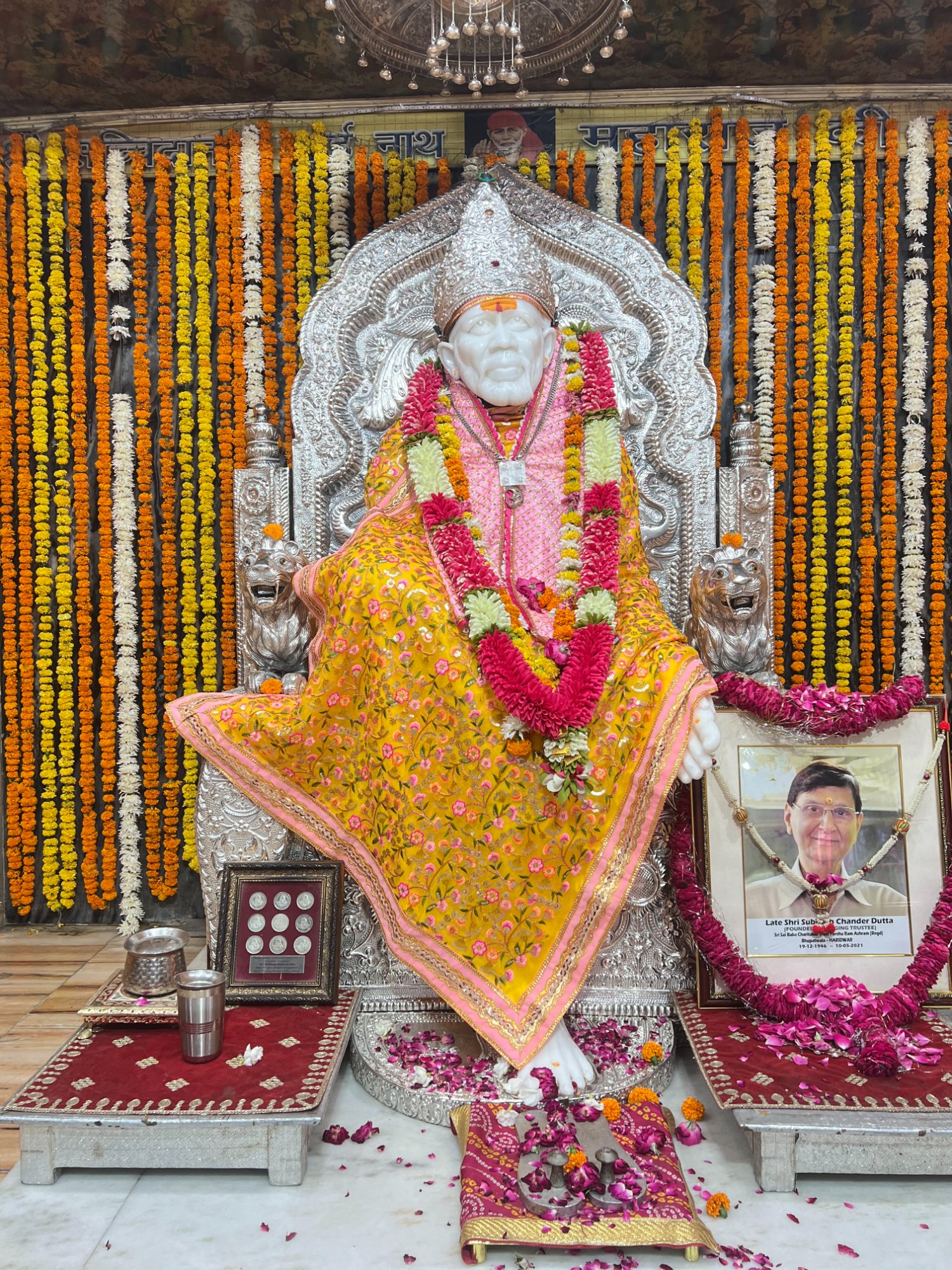
Om Sai Ram
Nestled in the sacred heart of Bhupatwala, near Har Ki Pauri — serving devotees with love, faith and compassion since 1994.
This is the first Shirdi Sai Baba temple established in the holy city of Haridwar. The land for the Mandir was acquired in September 1990 in the name of Pt. Chunilal, and the Sai Baba Charitable Trust Parashuram Ashram was formed in September 1991.
The foundation was laid the same year, and after three and a half years of devoted construction funded entirely by devotees' donations, the temple was inaugurated on 5th May 1994 by Shri A.K. Tailor of Rishikesh.
Baba's sacred Dhuni was specially brought from Shirdi by Shri Kote Patil, a Trustee of Shri Saibaba Sansthan Trust, Shirdi. For the Pran Pratishtha ceremony, nine Havan Kunds were prepared and a week-long puja was conducted in the Vedic tradition by 51 Acharyas.
A peaceful and affordable dharamshala right next to Sai Baba Mandir, offering comfortable accommodation for pilgrims and devotees visiting Haridwar.
Sai Dham dharamshala is located right next to Shri Sai Baba Mandir at Bhupatwala, offering pilgrims and devotees a comfortable, clean, and affordable place to stay during their visit to the holy city. Whether you're here for darshan, Ganga Aarti at Har Ki Pauri, or attending temple festivals — Sai Dham is the perfect base for your spiritual journey.
For live Instagram feed integration, use Elfsight, Behold.so, or SnapWidget — see HTML comments for setup instructions.
Four Aartis performed daily — Kakad, Madhyanha, Dhup, and Shej Aarti following the traditional Shirdi Sai Baba rituals. Abhishekam and Holy Bath ceremonies.
Free community meals served to devotees and the needy every Thursday and during festivals, embodying Baba's teaching of service to humanity.
Regular readings of the Sai Satcharitra — the holy scripture of Sai Baba's life and teachings. Weekly and special occasion group readings.
Devotional music sessions and community singing. Special Bhajan Sandhya events during festivals and Thursdays.
Classes conducted at the temple premises for the physical and spiritual wellbeing of the community.
Support for religious, cultural, educational and charitable activities. Medical camps, educational programs, and welfare initiatives.